
In a world where every brand is shouting on screens, the one format that still makes people pause—even for a second—is out-of-home. And honestly, OOH advertising in India isn’t just surviving the digital wave; it’s evolving into something far more impactful.
But here’s the interesting part: the most effective OOH today isn’t the obvious “big hoarding at the main signal.” That era is done. The new wave is subtle, contextual, and deeply experience-driven.
Let’s talk about what’s really happening out there on the streets.
1. The Shift From Visibility to Memorability
Do brands still want visibility? Of course. But what actually moves people is memorability. Modern OOH placements—metro pillars, airport walkthroughs, mall atriums—aren’t just seen; they’re felt. Consumers naturally remember brands they meet during unhurried moments, not during screen fatigue.
This is where India stands out. No other country has this mix of chaos + attention pockets. And the brands that understand this are getting disproportionate recall.
2. Why Real-World Touchpoints Beat Digital Frequency
Digital ads chase people. OOH meets people where they are already present. It’s a small but powerful difference.
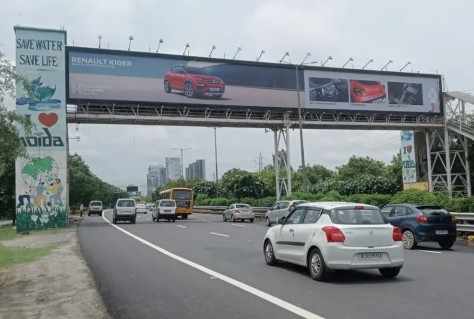
Whether commuting through Noida–Greater Noida Expressway, strolling in DLF malls, or waiting at airport security lines—OOH feels natural. It doesn’t interrupt. It accompanies.
This makes OOH one of the few mediums where attention feels voluntary, not forced.
3. The Rise of “Smart OOH”
Today’s OOH isn’t static anymore.
Dynamic screens
Programmatic buying
Day-part targeting
Footfall analytics
City-level heat maps
Brands now know exactly who saw what and when. For a medium once considered “unmeasurable,” this is a dramatic reset.
OOH advertising in India has quietly become data-driven, without losing its old charm.
4. Tier-II and Tier-III Cities Are the Real Growth Story
Everyone focuses on metros. But the real efficiency?
It’s happening outside the metros.
Indore, Lucknow, Jaipur, Coimbatore, Nagpur—these cities have:
Higher ad recall
Lower media saturation
More time spent on streets
Faster-growing brand adoption
National brands are finally acknowledging this. And local brands? They have always known it.
5. Experiences, Not Just Spaces
The strongest OOH today feels like an event—however small.
A well-lit skywalk panel.
A curated metro station gallery.
A QR-led coffee sampling zone inside a mall.
A narrative billboard at a traffic-heavy U-turn.
These aren’t “placements.” They’re moments. And moments travel—through social media, stories, and everyday conversations.
6. The Simplicity Advantage
Here’s the truth no one says out loud: OOH works because it’s simple.
One message.
One visual.
One emotion.
No scroll.
No skip.
No 5-second pressure.
Just presence.
Final Thought
OOH advertising in India is no longer about size. It’s about timing, relevance, design, and understanding how people actually move through their day.
Brands that treat OOH as a “creative playground” rather than a “mandatory spend” are the ones seeing the highest response, both online and offline.



Write a comment ...